


Campaign Success: “FUTI Celebrate UTokyo’s 150th Anniversary with a Gift”
It is with great pleasure to share the successful conclusion of the “Celebrate UTokyo’s 150th Anniversary with a Gift” Campaign. Thanks to the generosity of more than 150 individual donors who came forward during the campaign period, the anonymous $150,000 matching gift pledged in support of this initiative has been secured. As the University of Tokyo approaches its 150th anniversary in 2027, this achievement stands as a meaningful reflection of the enduring commitment of FUTI’s alumni, students, and supporters to the University’s continued growth. Since its establishment in 2007, FUTI has supported the next generation of researchers and leaders in their global pursuits through scholarships and travel awards, and this campaign’s success will directly strengthen that mission for years to come. We wish to extend our sincere and heartfelt thanks to our donors for their part in reaching this milestone. Their generosity ensures that promising students and scholars, in both Japan and the United States, will continue to have the opportunity to pursue meaningful academic and professional exchange. We deeply appreciate your continued generosity and look forward to sharing further updates on the impact of your support. Sincerely,Iwao Ojima, CEO, Friends of UTokyo, Inc.Yuichiro Kuwama, CFO, Friends of UTokyo, Inc.Junji Takegami, COO, Friends of UTokyo, Inc.
Scholarship Programs for Fiscal Year 2026
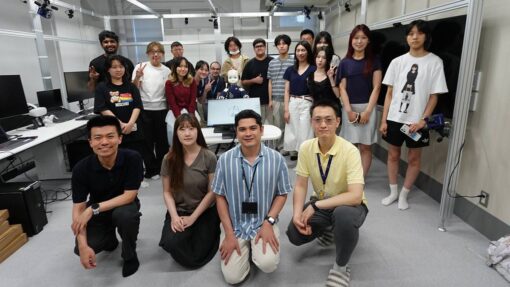
FUTI provides scholarships to support two types of study abroad programs: reciprocal short-term summer exchange programs between the University of Tokyo (UTokyo) and U.S. universities, and medium to long-term study abroad programs (one semester or longer), primarily for UTokyo undergraduate students, graduate students, and alumni pursuing higher degree programs at U.S. universities. Short-Term Study Abroad Programs A total of 64 students applied for the 2026 summer short-term study abroad scholarships. These include 57 applicants from U.S. universities seeking to attend UTokyo and 7 applicants from UTokyo seeking to attend U.S. universities. Ultimately, scholarships will be awarded to 10 students: 8 from U.S. universities going to UTokyo and 2 from UTokyo headed for U.S. universities. As in the previous year, the most popular program was UTRIP (University of Tokyo Research Internship Program), which offers research internships in UTokyo’s science laboratories. A total of 43 applicants applied to FUTI for this program, including many outstanding students from leading universities. However, competition for admission was intense. Among FUTI applicants, only two students were admitted to UTRIP, one of whom participated through the University of California Education Abroad Program (UCEAP). Three UCEAP students were admitted to the Engineering Summer Education Program (ESEP), which provides research internships in UTokyo’s engineering laboratories. In addition, two students were admitted to the Global Unit Courses (GUC) program at UTokyo and will participate in the short-term program with FUTI scholarships. One notable feature of this year’s inbound short-term program was that a significant number of students selected by FUTI were ultimately not admitted by UTokyo. In UTRIP, three of the five applicants selected by FUTI were not accepted by UTokyo, while in GUC, two of the four applicants selected by FUTI were not admitted. This suggests that competition for UTokyo’s summer programs has become increasingly intense as applications from around the world continue to grow. For outbound short-term summer study from UTokyo to U.S. universities, two students, one undergraduate and one doctoral student, were selected for scholarships. Medium- and Long-Term Study Abroad Programs FUTI received 39 applications for scholarships supporting study abroad programs lasting one semester or longer, and has selected 13 recipients. For the first time, an applicant from a U.S. university sought support for a dual-degree program at the University of Tokyo graduate school. Although FUTI selected the applicant, the student was unfortunately not admitted by UTokyo. As a result, all medium- and long-term scholarship recipients this year are students coming from UTokyo to U.S. universities. The breakdown of the 13 scholarship recipients (selected/applicants) is as follows: Within the first category, approximately 70% of applicants were seeking to apply to universities participating in UTokyo’s USTEP exchange program. UTokyo currently has exchange agreements with nearly 100 universities worldwide, including nine in the United States. Four of the six selected students in this category will participate in the USTEP exchange program. Since USTEP students pay tuition only to UTokyo while tuition at the host U.S. university is waived, and because admission to the host institution is generally assured once students pass UTokyo’s internal selection process, the program remains highly attractive to students. Until recently, USTEP was available only to UTokyo students. In FY2025, FUTI piloted scholarship support for a U.S. student participating in the exchange programs at UTokyo. However, no applications were received from U.S. students this year. The third category remained highly competitive in both the quality and number of applicants. Although scholarships supporting overseas study have become more common in Japan, opportunities for individuals who have already completed university or graduate school and later decide to pursue another degree abroad remain relatively low. While both the number and overall quality of applications from doctoral students had seemingly declined in recent years, this year’s applicant pool included several exceptionally strong candidates. As a result, FUTI was able to award Hisashi Kobayashi Memorial Scholarship to two outstanding doctoral students. At the beginning of this year, we were concerned that changes in the U.S. administration’s policies toward international students and increasing political pressures on American universities might discourage students from studying in the United States. However, the number of applications for FUTI scholarships slightly exceeded that of the previous year. Nevertheless, reports indicate that many U.S. universities have significantly reduced admissions to doctoral programs for international students compared with last year. It remains uncertain how these developments will affect future study abroad trends in the coming years. Despite these emerging challenges, FUTI remains fully committed to making the most effective use of every donation entrusted to us. Through our scholarship programs, we will continue to support and cultivate the next generation of global leaders with dedication and sincerity. Nobuko Sakurai, Chair of the Scholarship Committee
Prof. Takatoshi Ito Memorial Lecture Series (Lecture 1 by Dr. Yuki Haba)
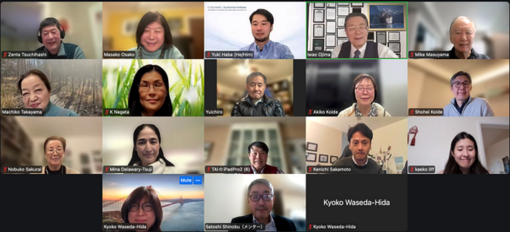
The inaugural Prof. Takatoshi Ito Memorial Lecture was held on January 23, 2026. This lecture marked the launch of a new memorial lecture series established in honor of the late Prof. Takatoshi Ito, whose longstanding dedication and generous support played an indispensable role in the growth of Friends of UTokyo, Inc. (FUTI). The series reflects FUTI’s commitment to its mission of nurturing the next generation of leaders. (For more information, please see Launch of “The Prof. Ito Memorial Lecture Series: Featuring Early-Stage Professionals”.) The first speaker in this commemorative series was Dr. Yuki Haba, recipient of the 2015 FUTI Scholarship and currently a member of FUTI’s Advisory Committee. Dr. Haba is an evolutionary biologist and is conducting research at the Zuckerman Mind Brain Behavior Institute at Columbia University. The lecture opened with welcoming remarks by Dr. Iwao Ojima, Chair of the FUTI Board of Directors, who introduced FUTI’s founding mission and described the organization’s history and activities. He also paid tribute to Prof. Ito’s many contributions, particularly his leadership in establishing the FUTI Travel Award and his unwavering commitment to supporting young scholars and researchers. Dr. Ojima concluded by expressing the organization’s deep gratitude and remembrance of Prof. Ito. Dr. Haba then delivered a lecture entitled: “Human-Biting Urban Mosquitoes Originated in Ancient Egypt: International Research Overturns a Long-Held Evolutionary Theory and Marks an Important Step Toward Eliminating Mosquito-Borne Infectious Diseases.” The presentation was based on a research paper published in Science in October 2025 and explained, in an accessible manner, the background of the study, its methodology, and the significance of its findings. The lecture generated considerable interest among participants and was followed by a lively question-and-answer session. Lecture Summary Urbanization is rapidly reshaping landscapes around the world, posing the question of whether and how quickly animals and plants can adapt. Cx. pipiens form molestus, more commonly known as the London Underground Mosquito, has been held up as a benchmark for the potential speed and complexity of urban adaptation. This intraspecific lineage within Cx. pipiens s. s. is purported to have evolved human-biting and a suite of other human-adaptive behaviors in the subways and cellars of northern Europe within the past 200 years. It features prominently in textbooks as well as scholarly reviews of urban adaptation. Yet the hypothesis of in situ urban evolution has never been rigorously tested. In addition to spawning an enigmatic human-biting form, Cx. pipiens s. s. is one of the most important vectors of mosquito-borne disease in temperate regions across the world. The ancestral form of Cx. pipiens is bird biting and serves as a major vector of West Nile Virus (WNV) within bird populations. Hybridization of this ancestral bird-biting form with human-biting molestus produces mosquitoes willing to bite both birds and humans and is hypothesized to have driven increasing spillover of WNV to humans in the US and southern Europe over the past two decades. While this hypothesis has spurred intense efforts to characterize gene flow between forms, the results have been variable and confusing, with no clear consensus on where and to what degree it occurs. Dr. Haba’s group sequenced the whole genomes of ~350 contemporary and historical Cx. pipiens mosquitoes from 77 populations scattered across Europe, North Africa, and western Asia and used population genomic analysis to infer molestus’ evolutionary history. Studies of population structure, derived allele-sharing, phylogeny, and cross-coalescence show that molestus could not have evolved in urban belowground habitats over the last 200 years. Instead, it first adapted to human environments >1000 years ago in the Mediterranean basin, most likely in Ancient Egypt or another early agricultural society. Genomic data sets also provide a major revision to our understanding of gene flow between bird- and mammal-biting forms. We found that genetic signatures researchers previously ascribed to between-form hybridization instead reflect ancestral variation within bird-biting populations. After correcting for this variation, we can see that true hybridization is less common than previously believed and is associated with human population density, a proxy for urbanization. The work of Dr. Haba’s team debunks one of the most widely cited examples of rapid urban adaptation, an example that has captured the attention of scientists and lay people for 25 years. Rather than benchmarking the speed and complexity of urban evolution, this updated history highlights the role of early human society in priming taxa for colonization of modern urban environments. Our work also revises our fundamental understanding of gene flow in this important vector and opens the door to incisive investigation of the potential links between urbanization, hybridization, and arbovirus spillover to humans. Reference Haba, Y., et al. “Ancient origin of an urban underground mosquito.” Science (2025). https://doi.org/10.1126/science.ady4515 FUTI Staff
Prof. Takatoshi Ito Memorial Lecture Series (Lecture 2 by Jeffrey Miyamoto)
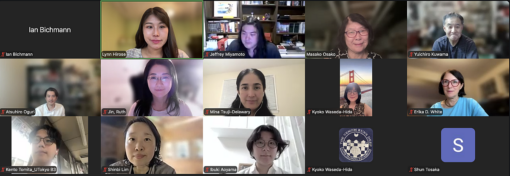
On July 17, 2026, Friends of UTokyo (FUTI) held the second Professor Takatoshi Ito Memorial Lecture, featuring Jeffrey Miyamoto, Investment Analyst at Orbis Investments. His presentation, entitled “Asia’s Emerging Arms Makers: India, Korea, and Japan,” examined the changing landscape of the defense industry in Asia. Mr. Miyamoto earned his bachelor’s degree from the University of Nevada before completing a Master of Public Policy (MPP) at the University of Tokyo’s Graduate School of Public Policy (GraSPP), where he studied under Professor Takatoshi Ito. He later received both a Juris Doctor (JD) and an MBA from Yale University. He is currently engaged in global equity investment analysis. Mr. Miyamoto began by explaining how the global security environment has changed dramatically since Russia’s invasion of Ukraine, bringing renewed attention to the defense capabilities of countries around the world. He noted that while defense production capacity in many Western countries had declined during the decades following the end of the Cold War, India, South Korea, and Japan maintained their industrial bases, positioning them to become increasingly competitive in today’s market environment of heightened international demand. He then discussed how each country has pursued a distinct strategy for developing its defense industry. In India, government policies promoting domestic production have strengthened indigenous manufacturing. South Korea has emphasized export-driven growth, while Japan has expanded its defense industry through major shifts in national security policy and increased defense spending. Despite these different approaches, Mr. Miyamoto emphasized a common trend: “security policy is becoming intertwined with industrial policy.” From an investor’s perspective, he also explained how geopolitical developments and policy changes can have lasting effects on corporate values. Through numerous examples, he illustrated the importance of understanding politics, national security, and industrial policy together when evaluating long-term investment opportunities.The lecture was followed by a lively question-and-answer session covering topics such as the future of Japan’s defense industry and evolving defense policies across Asia. Participants gained valuable insights into how changes in international politics and security are shaping economic development and corporate strategy from multiple perspectives. A particularly memorable aspect of this year’s event was the participation of alumni of GraSPP (Graduate School of Public Policy at The University of Tokyo) from around the world who had studied alongside Mr. Miyamoto under Professor Ito. They shared personal memories of Professor Ito, creating a warm and meaningful atmosphere that was especially fitting for a memorial lecture. We are deeply grateful to the GraSPP alumni community for their assistance in promoting this event. FUTI will continue to organize lectures featuring distinguished speakers at the forefront of their fields, addressing a wide range of topics including public policy, international affairs, and economics. We look forward to welcoming you to our next event. Mr. Jeffrey Miyamoto Bio: Jeffrey Miyamoto is an investment analyst at Orbis Investments, an asset management firm based in Bermuda, where he has worked for the last seven years. He received his MPP from the University of Tokyo in 2014 from the Graduate School of Public Policy where he studied under late Professor Takatoshi Ito. He graduated with a BA in history at the University of Nevada, Las Vegas in 2011 and received his JD/MBA from Yale University in 2019. References: Jeffrey Miyamoto: https://www.orbis.com/au/investor/insights/commentaries/quarterly/2023/q1/international Upon request, additional articles on the related theme will be available to readers. FUTI Staff
FUTI launches International Pathways Award Program to Support UTokyo Taiken Program
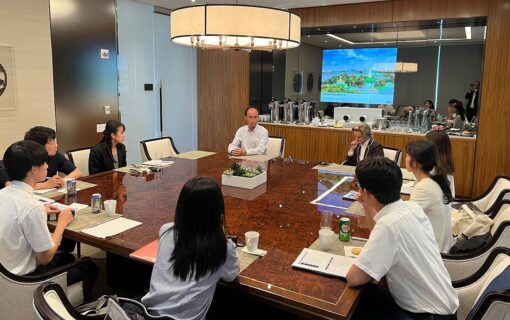
In 2012, UTokyo started a specially designed project to expose students to lifestyles and values different from their own through direct experiences beyond the University’s classrooms. The Taiken (hands-on or experiential) Learning Program, has offered more than 100 programs across a wide range of fields and locations this year, including 29 overseas programs that send students to foreign countries in Asia, Europe, Africa, and North America. Local alumni groups are hosting five U.S. programs in 2026. Participating students will meet with alumni face-to-face at their workplaces and hear about how they came to pursue their careers in the U.S. and what it is like to live and work here. These U.S. based Taiken programs draw strong interest from many students every year, yet the cost of taking part, including airfare, lodging and meals, has climbed sharply since the pandemic amid persistent inflation and continued weakening of the yen against the U.S. dollar. There is a real risk that many qualified and motivated students may be forced to pass up the opportunity purely for financial reasons. In May 2026, FUTI launched the International Pathways Award (IPA) Program to support the Taiken programs hosted in U.S. cities. The IPA grants $1,000 to $2,000 per person to one undergraduate student participating in each of the five U.S.-based programs in New York, Chicago / Washington D.C., San Francisco, Silicon Valley, and Boston. All of these are high-cost locations. This Award advances FUTI’s mission of providing “financial support and opportunities in cooperation with The University of Tokyo for the exchange of ideas in cultural, scientific, academic and social fields.” Although the amount to be disbursed under the IPA is modest compared with FUTI’s existing scholarships and travel awards, its impact is significant. Over the years, many participants of the Taiken program have decided to pursue international careers, study abroad, or rethink conventional career plans, directly influenced by insights gained from the U.S. Taiken programs or firsthand experiences shared by alumni they met. They have commented that the U.S. programs were truly life-changing. The programs also serve as valuable networking opportunities between UTokyo students and alumni, connections that may prove invaluable years later, in case they build their careers in the United States. Jotaro Hamada, Coordinator, FUTI International Pathways Award Program
UTokyo New York Office Relocation Ceremony Held

On Saturday, June 6, 2026, a ceremony celebrating the relocation of the University of Tokyo New York Office (UTokyoNY), along with a commemorative dialogue event, was held at its new premises in Manhattan. The gathering brought together numerous guests, including alumni residing in the United States, researchers, and partners from academic institutions and industry, to celebrate the office’s fresh start in North America. The new office has moved into the Heron Tower building, located in the heart of Midtown Manhattan, approximately a 10-minute walk from the previous location. Following his work on the former office, Associate Professor Yoshiyuki Kawazoe of the Institute of Industrial Science designed the interior. At the entrance, a new navy blue noren (traditional Japanese hanging curtain) featuring the university’s ginkgo mark is displayed, and the Shelf of Wisdom, a display shelf crafted from timber donated by Japanese local governments that hold partnership agreements with the university, was also brought over to the new office. The shelves throughout the premises also feature various items that chronicle the history and milestones of the office’s past activities. Moderated by Professor Yoshiho Ikeuchi of the Institute of Industrial Science, the ceremony opened with congratulatory remarks from Dr. Teruo Fujii, President of the University of Tokyo; Mr. Yasuo Okamoto, President of UTokyoNY; and Ambassador Satoshi Katahira, Consul-General of Japan in New York. The subsequent dialogue session featured President Fujii, Professor Miles Pennington of the Institute of Industrial Science (the Prospective Dean of UTokyo College of Design, a new college scheduled to launch in the fall of 2027), and Ms. Anna Esaki-Smith, an educational journalist. The participants engaged in an animated discussion on how to address increasingly complex contemporary social issues through a design approach and how to shape knowledge for the next generation. During the session, Ms. Esaki-Smith provided insights into the current global landscape of higher education and the efforts of Japanese universities to attract international students. In response, President Fujii spoke passionately about the future of global education in the AI era and UTokyo’s vision. Professor Pennington then outlined his educational vision for the new college, highlighting practical programs designed to transcend existing academic frameworks and deliver real-world social impact. A lively Q&A session followed, with local stakeholders and alumni raising many questions, reflecting the high expectations in North America for the forthcoming college. Following the session, a gift exchange ceremony took place with Daikin, which has a local base in New York. Mr. Takayuki Inoue, Senior Managing Executive Officer of Daikin, and Mr. Yoshiyuki Uemura, Managing Executive Officer of Daikin and President of Daikin US, presented a copy of The New York Times published on July 1, 2015, the date of UTokyoNY’s official incorporation. In return, President Fujii and President Okamoto presented a reproduction of a shin-hanga (modern Japanese woodblock print) depicting the Akamon. In addition, Mr. Kazuhiro Sakurai, President of DASSAI Inc., gave a talk on his company’s sake-brewing initiatives in New York State. The company and the New York Office have been collaborating since 2019 through various joint activities, including lectures and workshops. The event concluded with closing remarks delivered by Professor Hiroaki Aihara, Executive Vice President of the University of Tokyo. At the subsequent reception, a traditional kagami-biraki (sake barrel-breaking) ceremony was held. The kagami-biraki featured key figures, including Professor Iwao Ojima, President of Friends of UTokyo, Inc. (FUTI); Professor Geeta Mehta, Board Director of FUTI and Member of the Management Policy Council of the University of Tokyo; Mr. Katsuhiko Hibino, President of Tokyo University of the Arts, which has concluded a comprehensive partnership agreement with UTokyo and is collaborating on the concept for the UTokyo College of Design; Ambassador Katahira; President Fujii; and President Okamoto. They took up wooden mallets to celebrate the launch of the new office. With that, the highly successful event drew to a close. Note: Reprinted from the UTokyo New York Office’s website with the Office’s permission.
Applications Now Being Accepted for the 2026 FUTI Scholarship Programs

FUTI has recently begun accepting scholarship applications for 2026. Information is available at friendsofutokyo.org/scholarships-awards. The scholarships are offered to qualified students and alumni of UTokyo aspiring to study in universities in the US and to students at universities in the US interested in studying at UTokyo, regardless of nationality. Short-term study scholarships are awarded with funding made available through the Hsun Kwei & Aiko Takizawa Chou Scholarship and the FUTI Global Leadership Award programs. However, an applicant need only submit their application through a single portal mentioned above. FUTI has just one set of procedures for application, criteria, selection, and awarding, and will notify recipients as to which scholarship will be awarded after assessing the best fit to fulfill the focus of each scholarship category. The Hsun Kwei & Aiko Takizawa Chou Scholarship, administered by Friends of UTokyo, Inc. (FUTI) is funded by a generous donation made to the University of Tokyo New York Office (UTokyoNY) by Dr. Hsun Kwei Chou and Mrs. Aiko Takizawa Chou. Short-term programs are also supported by donations from UTokyo alumni and other individual supporters of FUTI. There are several scholarships in the mid- to long-term studies category including the ITO FOUNDATION U.S.A.-FUTI Scholarship, IF Ikuei Scholarship, Hsun Kwei & Aiko Takizawa Chou Scholarship, FUTI Scholarship, and Hisashi Kobayashi Memorial Scholarship (for doctoral students from anyJapanese university. As in the case of the scholarships for short-term studies, FUTI follows one set of procedures for application, criteria, selection, and awarding. The ITO FOUNDATION U.S.A. was established in the U.S. by its founder and former chairman, late Mr. Masatoshi Ito, who was the honorary chairman of Seven and i Holdings Co. He was also the founder and chairman of the Ito Scholarship Foundation which has a long history in Japan of supporting an extensive range of students with scholarships for their studies. We look forward to receiving applications from interested students.
2025-2026 Fundraising Campaign is Ongoing

The 2025-2026 FUTI Campaign is still underway, but this year is special! If more than 150 people donate during the campaign period (July 2025 – June 2026), the FUTI “Celebrate UTokyo’s 150th Anniversary with a Gift” Campaign will receive a major boost of $150,000 match by an anonymous donor. The donation can be in any amount, large or small. We are pleased to report that 26 donors have already contributed, but there is still time for you to help FUTI reach its goal! Since the inception of Friends of UTokyo, Inc. in 2007, 323 scholarships have been awarded to support University of Tokyo students to study in the US and US university students to study at UTokyo. These study abroad experiences, whether it be a few weeks participating in a summer internship or a long-term endeavor to obtain a degree, have made a valuable impact on the students’ lives. Students express their gratitude for the scholarship in their reports, often indicating that they would not have been able to afford the study abroad without the scholarship. FUTI’s scholarship programs are made possible through the generous donations from UTokyo alumni and other supporters of Friends of UTokyo who believe in this mission to support the global leaders of tomorrow. Click here to view a message from President Iwao Ojima and messages from select scholarship recipients.For more information and to donate, please visit friendsofutokyo.org/donate.
FUTI Travel Award Supports Early-Stage Scholars in Advancing Global Research and Collaboration

Applications for this award are accepted throughout the year, and non-tenured, early-stage scholars at the University of Tokyo are encouraged to apply and to spread the word of this award. Priority is given to US visits, but non-US trips will also be considered depending on the volume of applicants. The FUTI Travel Award for Early-stage Scholars was established in December 2023 and has awarded two recipients in the 2024-2025 cycle: Masaaki Miki who is anAssistant Professor ofGeneral Systems Studies at the Graduate School of Arts and Sciences at The University of Tokyo, and Masaki Michihata who is an Associate Professor at the Department of Precision Engineering at The University of Tokyo. In May, 2025, Assistant Professor Masaaki Miki attended the International Conference and Doctoral Summer School, “Geometric Aspects of Architecture and Mechanical Engineering,” at the Institute of Mathematics, University of Granada (IMAG) and delivered an invited lecture titled “Variable Projection (VarPro) Method and Form-finding of Tension-compression Mixed Shells,” along with a poster session where he engaged with peers on shell form-finding and geometry processing, with an emphasis on integrating discrete differential geometry into architectural design. In addition to the conference, he established connections with researchers from KAUST (King Abdullah University of Science and Technology), Cambridge, ETH Zurich, and other European institutions. In June, 2025, Prof. Masaki Michihata visited the National Institute of Standards and Technology (NIST) at the national metrology institute of the United States near Washington D.C. The visit provided a rare and valuable opportunity for him to observe and learn about the most advanced measurement technologies currently in development. Prof. Michihata engaged in discussions with several researchers and engineers. He received a detailed explanation from the team leader, Dr. Jay H. Hendricks, about the latest developments in pressure metrology including highly accurate manometers and piston gauges, and a new pressure standard under development known as the fixed length optical cavity (FLOC). He also was introduced to NIST’s capabilities in refractive index measurement using optical frequency combs, as well as their calibration systems for large-scale laser-based distance measurement devices. Furthermore, he observed their high-precision coordinate measuring machines (CMMs), micro-CMMs, and a newly developed ultra-precise caliper system. In addition, he participated in the Manufacturing Science and Engineering Conference (MSEC) held in Greenville, South Carolina, where he delivered a presentation in the session entitled, “Advances in System-level Modeling and Analysis in Manufacturing Towards Sustainability.” His talk entitled “Concept of Error Compensation for Non-orthogonality in Two-Axis Displacement Measurement System Utilizing Single Grating Scale and Littrow Configuration,” drew several questions from the audience and discussions continued after the presentation where he had the opportunity to become acquainted with professors from other institutions. Although it was his first time participating in MSEC, he found it to be an excellent opportunity to build connections with researchers at universities around the world as well as in the U.S. After the conference, he visited the University of Florida in Gainesville to visit laboratories in the Department of Mechanical and Aerospace Engineering. He engaged with several professors and had stimulating discussions about potential collaborations. The FUTI Travel Award is open to non-tenured, early-stage scholars at the University of Tokyo. Undergraduates, graduate students, and postdoctoral fellows are not eligible. Eligible fields include Natural Science: e.g., Medical, Biology, Public Health, Engineering, Chemistry, Physics, Data Science, Information and technology; STEM-eligible Social Science subjects (broadly defined): e.g., Quantitative Political Science, Economics, and Quantitative Approach to Public Policy. This award provides support for a short-term stay of less than 30 days for attending an international conference of small size (no more than about 300 participants where conference participants stay and have meals together in a small venue) and to conduct a side visit to colleagues at academic institutions. * This article is based on the reports submitted by the applicants. For details of the program and recipients’ reports, visit friendsofutokyo.org/futitravelaward
Report on the Annual Online Gathering of Mid- to Long-Term Scholarship Recipients

The annual online gathering for mid- to long-term scholarship recipients was held on December 6, 2025, at 8:00 PM ET. The purpose of the meeting was to foster a friendly and informal exchange of experiences and opinions among awardees, as well as with representatives from donor foundations, FUTI, and UTokyo members. The meeting was attended by ten mid- to long-term scholarship recipients for Year 2025-26, along with Ms. Asuka Sakai, Senior Director of the UTokyo Division of External Relations; Dr. Yuichiro Kuwama, FUTI Vice President and CFO; Dr. Masaaki Yamada, FUTI Advisory Committee Chair; and members of the FUTI Scholarship Committee: Nobuko Sakurai, Shig Matsushita, Iwao Ojima, Masako Osako, and Junji Takegami. The meeting was chaired by Nobuko Sakurai, Chair of the FUTI Scholarship Committee, who opened with a brief greeting and expressed her gratitude to all attendees. Following her introduction, Iwao Ojima, FUTI President and CEO, delivered a welcome message and provided some thoughts on the current state of the world. The meeting continued with short presentations from each scholarship recipient, followed by Q&A sessions. These presentations highlighted the challenges, inspirations, discoveries, and fulfillment experienced by the scholars during their studies in the US. A summary of select presentations is provided below. [Comments from a graduate of UTokyo’s Graduate School of Public Policy, currently pursuing a Masters in Regional Studies at Harvard University] A Ukrainian Master’s student at Harvard, who graduated from the University of Tokyo Graduate School of Public Policy, is concentrating his academic work on Ukraine’s economic development and international cooperation, particularly focusing on quantitative analysis, law, and policymaking. The student actively uses his studies to provide analytical insights to Ukrainian Members of Parliament, contributing directly to international security discussions, including those at the OSCE (Organization for Security and Co-operation in Europe). Post-graduation, the student plans to join the Ministry of Economy of Ukraine with the goal of fostering a strategic, long-term partnership between Ukraine and key international partners, especially Japan, whose critical budgetary support is highly valued. The student argues that Ukraine’s highly experienced military would be vital to European security, proposing that EU membership would serve as a crucial shield for the continent. [Comments from a graduate of UTokyo PEAK, currently a graduate student at Columbia University School of International and Public Affairs) As a second-year graduate student at Columbia University’s School of International and Public Affairs (SIPA), the student is specializing in international finance and economic policy to bridge the financial gap between the US and Japan. Her academic rigor includes coursework in financial risk management, monetary policy, and Japanese economic policy, supplemented by supporting programming at the Columbia Center of Japanese Economy and Business. Beyond the classroom, the student has aggressively pursued practical experience through multiple internships, including a role at Eurasia Group focusing on geopolitical risk and a long-term position with the U.S.-Japan Council, where she helps organize high-level economic summits and initiatives for young women in banking. This student is also involved in advocating for student safety and networking opportunities amidst a contentious campus climate at Columbia at present. The students at the gathering delivered compelling presentations, offering candid insights into how their academic experiences in the US differ from those at the University of Tokyo. The research topics spanned a wide range of disciplines including Pharmaceutical Science, Mathematics, and Design and Technology, each with promising practical applications that are sure to benefit society in the years to come.