Hiroyuki Takaba, Ph.D March 3, 2026
The Department of Immunology
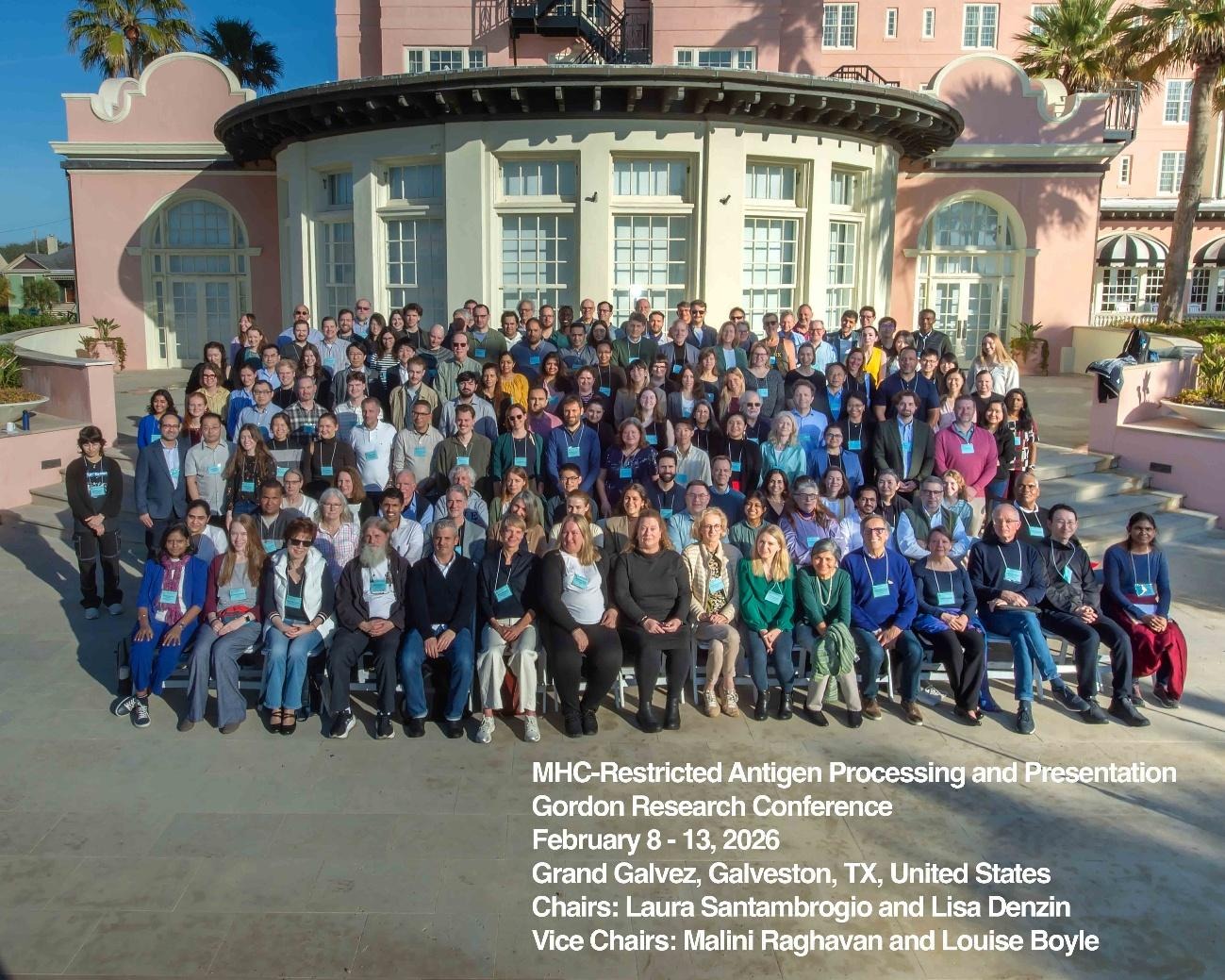
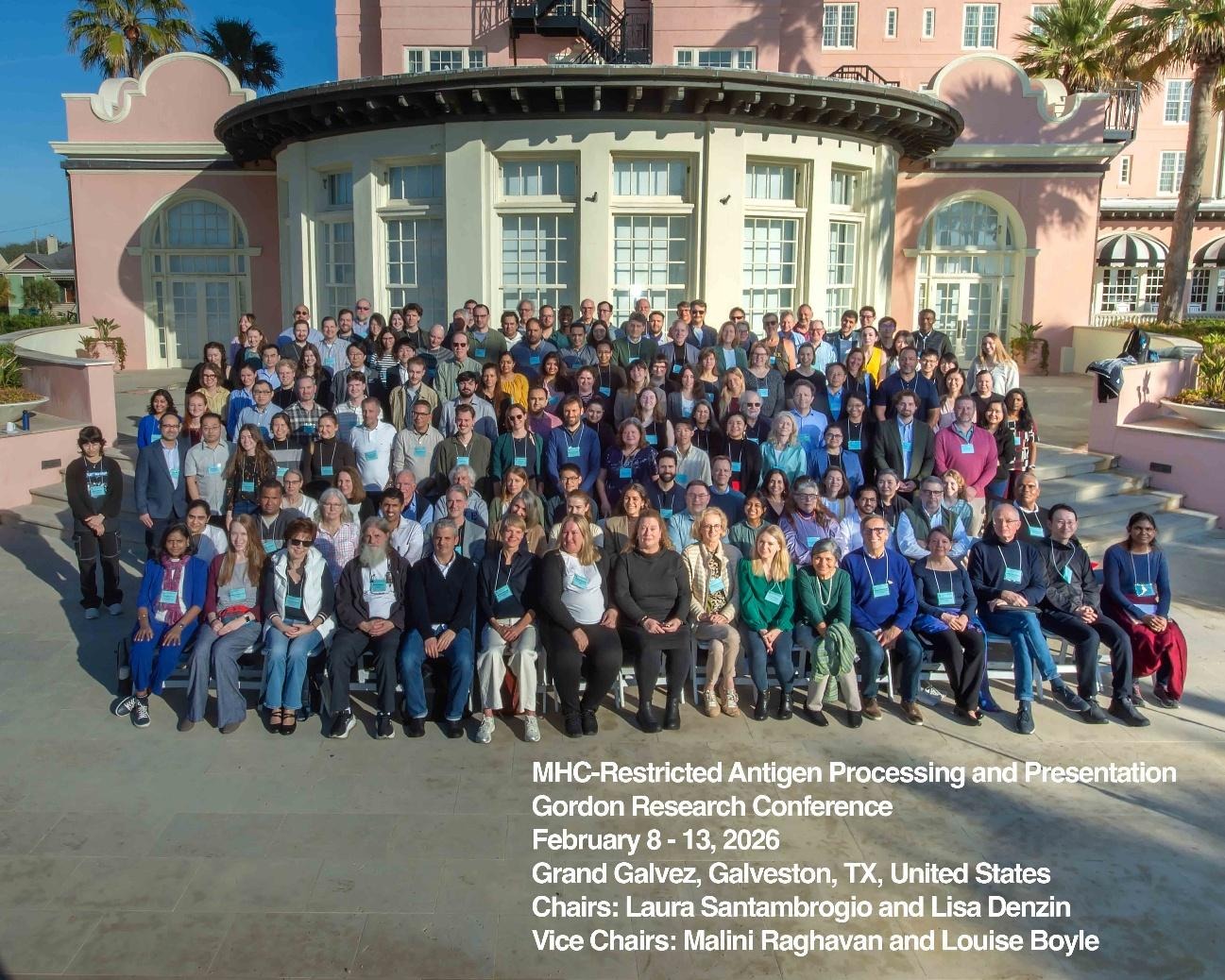
Business Trip Report; Gordon Research Conference: MHC-Restricted Antigen Processing and Presentation (February 8-13)
In the piercing cold of February in Kyoto, at Chion-in Temple, the discussions from the FOREST (Fusion-Oriented Research for Disruptive Science and Technology) consortium meeting were still fresh in my mind as I departed from Narita for Houston, Texas. My destination was Galveston, where the Gordon Research Conference on MHC-Restricted Antigen Processing and Presentation was being held. My central question was whether a subset of regulatory T cells generated in the thymus migrates to peripheral tissues and whether the structural and spatial context of those tissues themselves may function as the substrate of immunological memory—an “immune engram.” How would this hypothesis, supported by emerging data, be received by leading researchers at the forefront of the field? With anticipation and a quiet sense of tension, my journey to the United States began.
The week in Galveston was an intensely stimulating immersion in cutting-edge science from morning until night. One of the most significant outcomes of the conference was meeting Dr. Diego Chowell of the Icahn School of Medicine at Mount Sinai. Our discussions quickly deepened, leading to a subsequent visit to his laboratory and the formulation of concrete plans for future collaboration. Engaging with a researcher whose expertise spans mathematical statistics and immunology broadened the interdisciplinary scope of my own work and reaffirmed how direct interactions at international conferences can accelerate new research directions.
After the conference, I traveled along the East Coast to visit several laboratories at Columbia University, New York University (NYU), and Yale University. At Columbia, I met with Dr. Donna Farber, a leader in tissue-resident memory T cell research; Dr. Megan Sykes, a pioneer in transplantation immunology; Dr. Sho Iketani, who studies SARS-CoV-2 virology; and Dr. Kazuya Masuda, whose work focuses on skin T cells. We discussed future directions in immune tolerance and neuroimmunology. At Yale, I had the opportunity for one-on-one discussions with Drs. David Schatz, Richard Flavell, and Peter Cresswell, as well as with Dr. Juan Lafaille at NYU. These conversations provided concrete advice on the conceptual positioning of my work, experimental validation strategies, and connections to adjacent research areas.
Through these exchanges, the concept of the “immune engram” evolved beyond a preliminary idea into a more clearly defined framework capable of integrating studies of immunological memory, tissue immunity, and antigen presentation. The process of articulating ideas face-to-face, clarifying points that cannot be conveyed fully in written form and refining them through immediate feedback, proved highly effective in strengthening the testability of the hypothesis. Based on these discussions, I have been invited by the office of Nat Rev Immunology to prepare a review article integrating these perspectives, and I am currently working toward its publication.
Another profound realization from this extended stay in the United States concerned not only scientific progress but also the invaluable support provided by mentors and the global network of Japanese researchers. Prior to my departure, I received strong encouragement from Professor Tadatsugu Taniguchi, Professor Emeritus of Immunology at the University of Tokyo (UTokyo), who also facilitated introductions to many researchers during my visit to Yale. Throughout my travels, including visits to UT Southwestern (UTSW), I received generous support from Dr. Hitomi Sakano (connections through my graduate school mentor, Professor Hitoshi Sakano) and Dr. Yuki Obata at UTSW, as well as from Dr. Moriya Tsuji (Columbia University), a senior alumnus of the UTokyo Department of Immunology, and Dr. Shohei Koide (NYU), a Board Member of Friends of UTokyo, Inc. (FUTI). Their assistance ranged from scientific discussions to practical support for transportation and logistics. Presenting a new conceptual framework abroad can be a solitary challenge, and the encouragement from mentors and this community proved invaluable. I am deeply committed to giving back to this network and helping to pass these connections on to the next generation of Japanese scientists.
After narrowly avoiding a major snowstorm on the East Coast, I returned to Japan on a late-night flight to find the air already hinting at spring. Exhausted and jet-lagged, I celebrated my return in a humble way—unable to wait for an 8 a.m. gyudon shop to open, I instead had yogurt and bread from a convenience store. The scene was modest and grounded, yet my mind was filled with the words exchanged with researchers across the world and the strength of the Japanese scientific network that had supported me throughout the journey. I intend to build upon the discussions and connections gained during this visit to strengthen our university’s research capabilities, promote international collaboration, and advance the experimental validation of this new conceptual framework.
For further information, please see my Researchmap profile.
高場 啓之 (Hiroyuki Takaba) – マイポータル – researchmap