Name: Merve Bilgic
Affiliation: Assistant Professor, Molecular Neurobiology Laboratory, Institute for Quantitative Biosciences, The University of Tokyo
Travel period: 14-25 July 2026
Destinations: New York, NY and Portland, ME, United States.
From July 14 to 19, I stayed in New York for a research visit to the Tuschl Laboratory at The Rockefeller University, where the PAR-CLIP method for mapping RNA–protein interactions was developed. My aim was to learn how experiments of this kind are designed, carried out and interpreted before attempting them in my own project. I gave a talk on my research to the laboratory, and then discussed their ongoing projects with three senior staff scientists. Much of the conversation concerned the practical questions, such as how much input is required, crosslinking efficiency, library preparation, and the analysis pipeline. I returned with a concrete plan for adapting the approach to my own system.
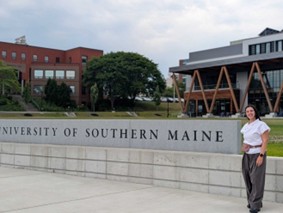
On July 19 I travelled from New York to Portland, Maine, and from July 19 to 24 I participated in the Gordon Research Conference on Post-Transcriptional Gene Regulation, held at the University of Southern Maine. The programme ran as nine sessions over five days, covering RNA granules, RNA modifications, RNA structure, translation, computation and artificial intelligence in RNA biology, RNA localization and transport, and RNA and disease. The poster presentation sessions took place over four days where I presented a poster on the second day. Amanda Whipple (Harvard University), who works on translation in neurons, came to my poster and gave me detailed advice on the use of antisense oligonucleotides in cultured primary neurons, and that the design I have in mind would require specific chemical modification rather than the standard chemistry. A researcher working on the same family of RNA-binding proteins as I am shared her laboratory’s RIP-seq protocol for primary neurons together with advice on antibody choice, including which antibodies to avoid. Xiaochang Zhang (University of Chicago) discussed the analysis software I currently use and pointed me to an alternative developed in his laboratory, and others suggested further tools for the motif analyses in my work. Several questions raised alternative explanations for my observations that I had not fully considered; these will directly shape the controls in my next set of experiments. I exchanged contact details with a number of researchers working on related questions in neurons or other contexts in the RNA field, and those conversations are continuing. I believe continued participation to GRC will be valuable in establishing my own position within this field.
In summary, this trip allowed me to present my recent findings to an audience of specialists and to receive substantive feedback on both interpretation and experimental design, and, through the visit to The Rockefeller University, it gave me a concrete plan for the experiments ahead. Each day was full of intense learning. I am deeply grateful to FUTI for their generous support, which also allowed me to connect with scientists in the same field, and to plan follow-up experiments.